Know-how: Aesthetics and Techniques of Airflow Design
Key questions and issues to consider when sizing and constructing industrial exhaust systems—from design optimization to the integration of specialized components, all the way to heat recovery strategies in industrial fume extraction lines. Quickduct’s expertise at the service of the professionals who have contributed to its growth.
How do you design an industrial exhaust ventilation system?
What components make up the system, and what variables affect its performance?
1.1 Definition of an air distribution system
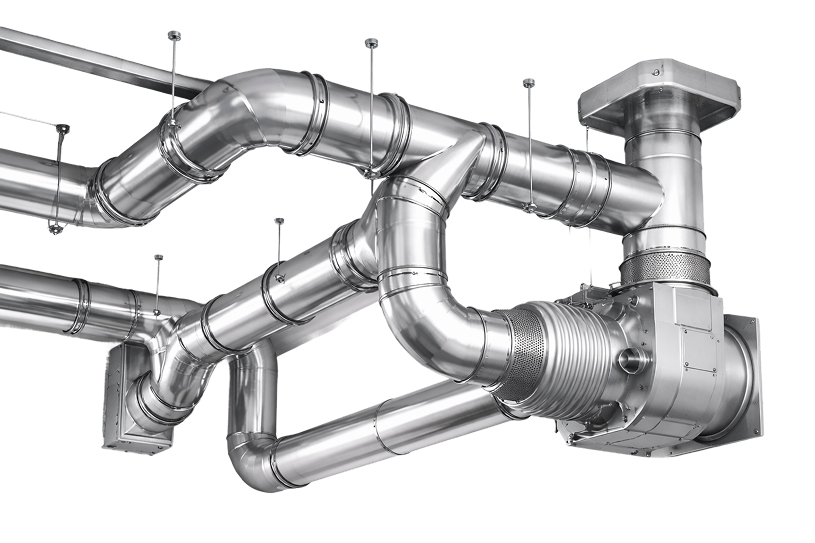
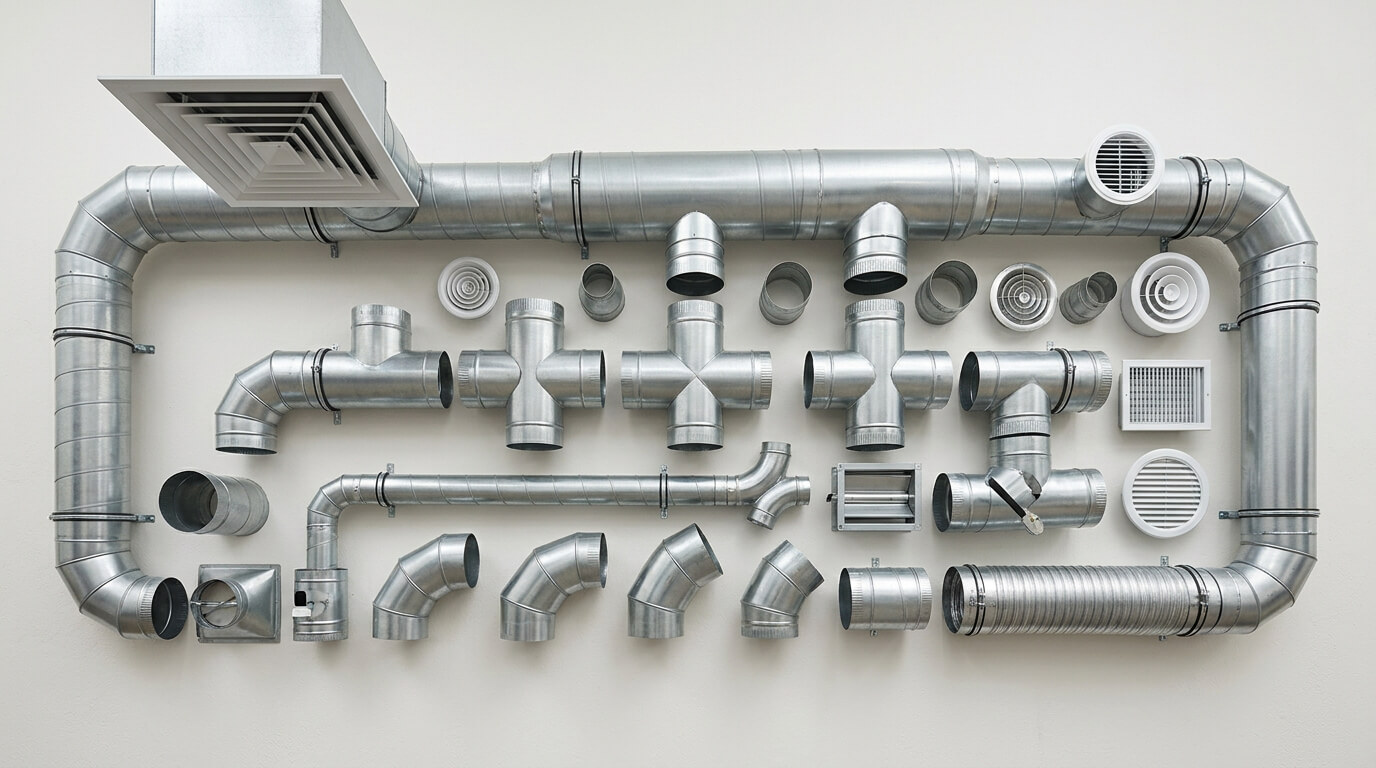
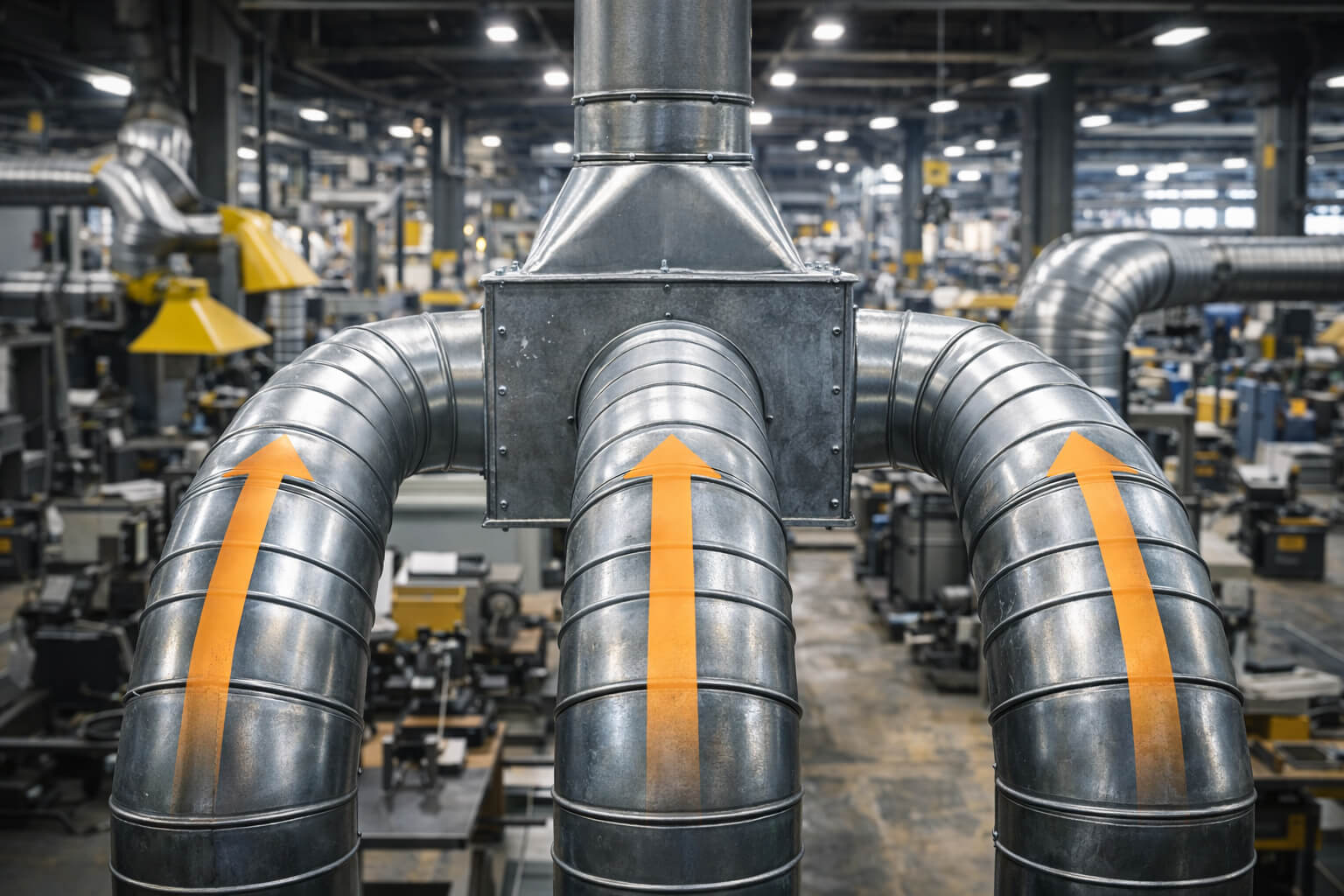
An industrial dust collection system is a system for conveying air and particulate matter, consisting of ducts, fittings, and functional components, designed for the extraction, transport, and controlled discharge of airborne pollutants under negative or regulated pressure conditions.
An air distribution network for process extraction generally includes:
dust filtration and separation units (filters, cyclones, dust control systems)
fans for forced air circulation
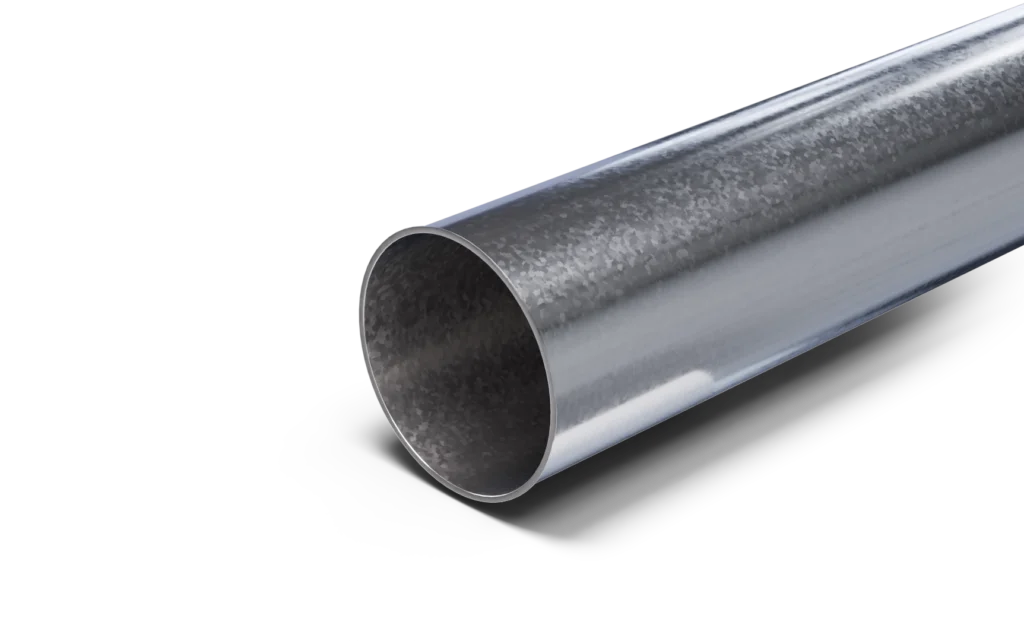
air ducts for transporting air and particulate matter
intake points and suction terminals
control systems for managing process parameters
Within this system, the piping network serves as the link between the various units and has a direct impact on the system’s performance and efficiency.
1.2 System Sizing and Layout
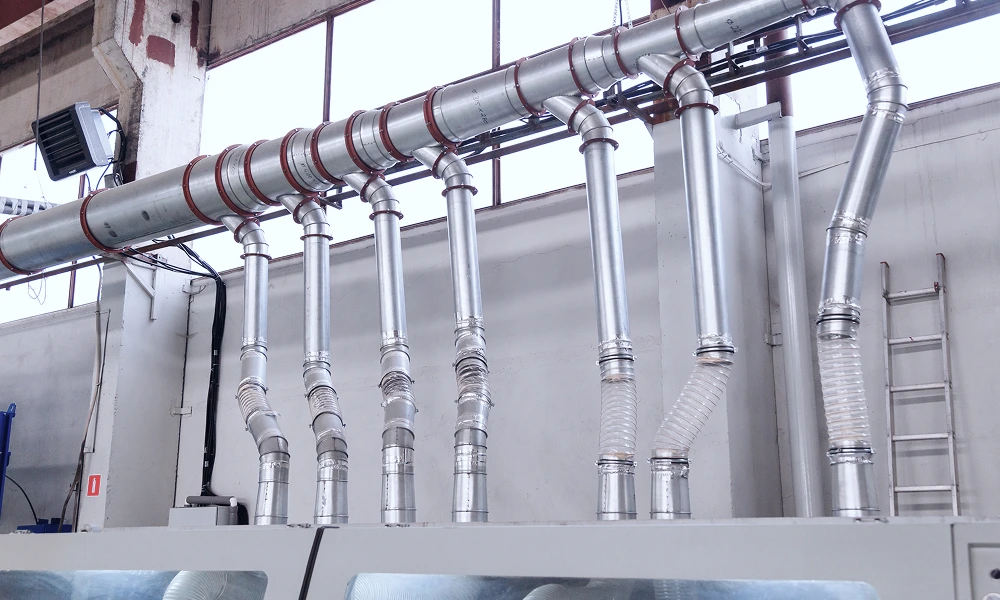
The design of an industrial dust collection ductwork system begins with an analysis of the available space and the production layout, which determine the system’s footprint and configuration. The distinction between intake ducts and supply ducts is fundamental: in the former case, the primary requirements are for particle capture at the machine and transport of particulate matter through the ductwork to the central filtration units; in the latter case, the focus is on air distribution, with different implications for diameters, velocities, and airtightness requirements.
Suction line
Supply Pipe
1.3 Integration with the production process
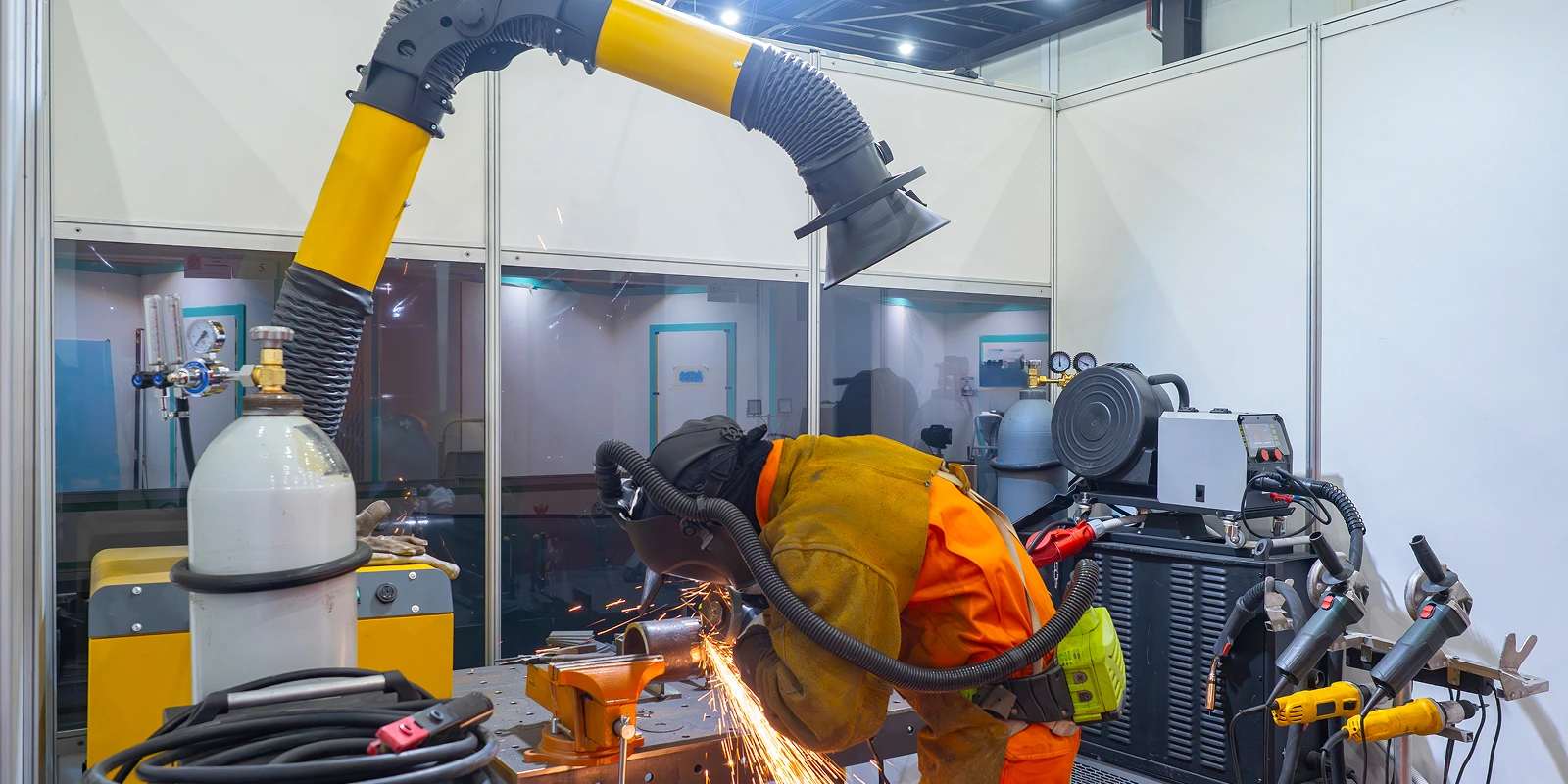
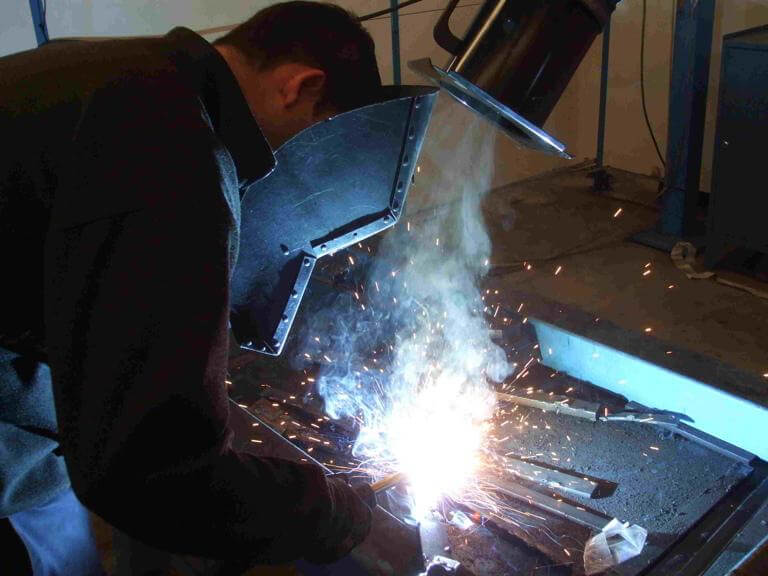
The design of the ventilation system must ensure effective integration between the ventilation network and the production process, beginning with the identification of the workstations and machinery to be connected. Capturing pollutants at the source is a top priority for limiting the dispersion of dust and fumes into the environment. In the case of a retrofit, the system’s configuration must adapt to existing facilities, ensuring operational continuity and compatibility with production lines.
1.4 System Optimization
Optimizing the ductwork system involves simplifying the layout and reducing the number of custom fittings, favoring linear configurations that promote uniform airflow and minimize pressure drops. Checking for air leaks along the ductwork system is a key factor in evaluating the efficiency of the installed system and, if necessary, verifying its compliance. Deviations from design values may indicate issues with the connections or the system’s configuration, requiring targeted corrective actions to restore performance.
2.0 Process Variables
What production-related factors influence the network configuration and the overall performance of the dust collection system?
2.1 Air Velocity
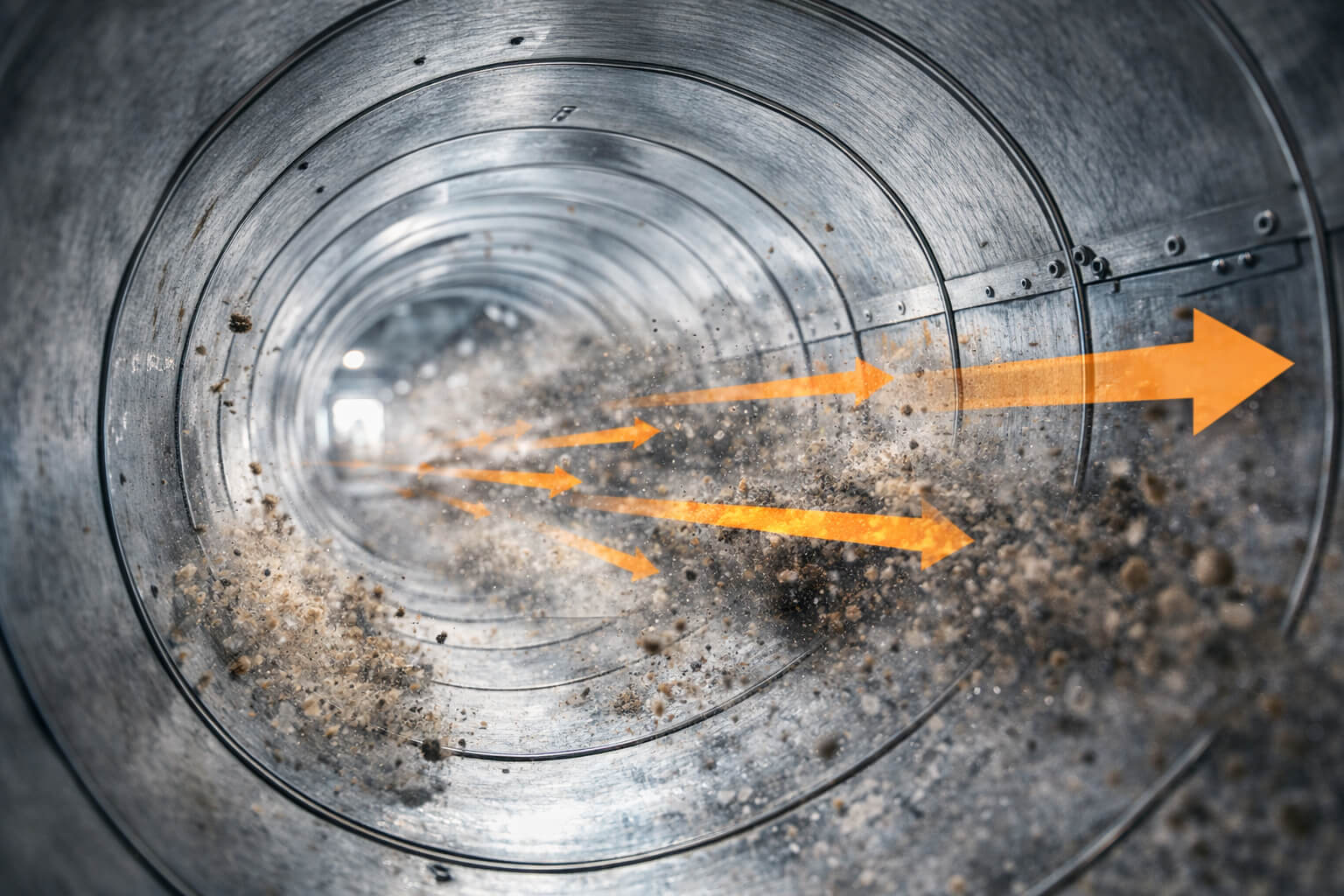
The air velocity inside the ducts is a critical parameter for the proper transport of particulate matter. Insufficient velocities can cause dust to settle and accumulate, while excessive velocities increase pressure drops, wear, and energy consumption. The duct sizing must therefore ensure adequate transport velocities based on the nature and particle size of the pollutants.
2.2 Pipe Capacity
The air flow rate is determined by the number of connected units and the air intake requirements at the source. A proper balance between flow rate, duct diameter, and velocity ensures stable operating conditions, preventing imbalances in the air distribution network and guaranteeing continuity in the industrial exhaust system.
2.3 Production Types and Process Pollutants
The characteristics of the production process and the type of pollutants directly influence the design of the ductwork. Fine dust, abrasive materials, light fibers, or wet contaminants require different solutions in terms of transport velocity, duct geometry, and network configuration to ensure the system’s efficiency and reliability.
2.4 Industry Regulations for Critical Production
In specific applications, the design must comply with technical standards and safety requirements. In potentially explosive atmospheres (ATEX), the management of combustible dusts imposes strict criteria on materials and system configuration. In the food industry, HACCP regulations require strict control of contaminants: it is therefore essential to implement products capable of preventing contamination and ensuring that pipes are cleanable and accessible to facilitate system decontamination.
3.0 SPECIAL COMPONENTS
How can we monitor the management of airflow and industrial particulate matter?
What special components need to be incorporated into the ventilation system?
3.1 Flow and Capacity Adjustment
Airflow regulation within an industrial exhaust ductwork system is primarily achieved through shut-off and control dampers, which allow the air flow rate to be adjusted in the various branches of the system. These components make it possible to adapt the system’s operation to prevailing conditions, helping to balance the ductwork and optimize performance.
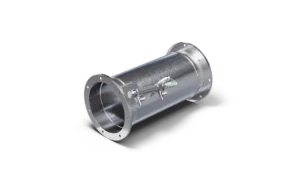
Butterfly Shutters
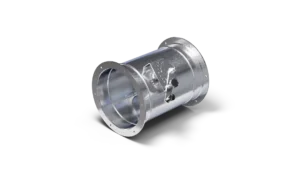
Butterfly dampers are control devices that allow for continuous modulation of airflow by rotating an internal disc. They are used to balance airflow in industrial exhaust systems, making it possible to adjust air distribution according to process requirements.
Roll-up doors
Guillotine dampers are designed to shut off airflow, primarily serving an ON/OFF function. They are used to isolate sections of a system or individual service points, facilitating maintenance operations or selective control of the air distribution network.
Gravity-operated shutters
Gravity dampers are passive control devices used in industrial exhaust ductwork systems, designed to allow air to flow in only one direction and prevent the backflow of air or particulate matter. They operate by automatically opening the damper when airflow is present and closing it by gravity when there is no pressure.
The noise generated by airflow in industrial ductwork is caused by high velocities, turbulence, and geometric discontinuities. Noise control is a key consideration in the design of ventilation systems, especially in production environments with a high density of equipment.
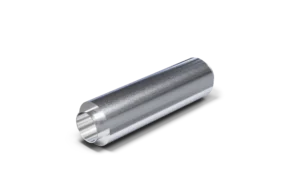
MUTERS
Silencers are components designed to attenuate aerodynamic noise within ducts. Installed at critical points in the ductwork, they help reduce the sound propagation generated by airflow and fan operation.
Vibrations generated by fans and machinery can travel through the ductwork system, affecting the system’s stability and contributing to the propagation of structural noise. Vibration isolation is therefore an important factor in ensuring operational continuity and the longevity of components.
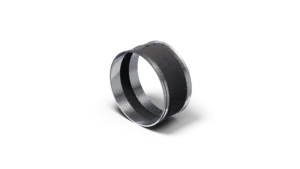
vibration-damping mounts
Vibration-damping couplings are flexible components installed between parts of the ductwork system to absorb vibrations and compensate for misalignments. Their use helps limit mechanical stress on the ducts and reduce the transmission of structural noise.
In industrial dust collection and extraction systems, after the air has been separated from the particulate matter inside the filters, the collected material must be removed continuously and in a controlled manner, without compromising operating conditions. Improper waste management can lead to buildup, loss of efficiency, or interference with system operation.
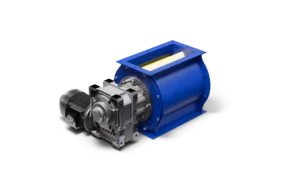
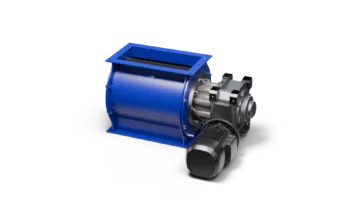
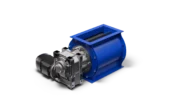
rotary valves
Rotary valves are devices used for the controlled discharge of particulate matter from filtration systems, while maintaining separation between the air handling environment and the external environment. Their operation is based on a vane rotor that allows solid material to pass through while preventing air backflow and pressure loss in the system. They are used in bag filters, cyclones, and dust collection systems.
How can we ensure compliance with technical regulations and the system's safety requirements?
4.1 Integration of Safety Components
In the presence of combustible dust, high process temperatures, or extensive ductwork systems that traverse multiple production areas, the ductwork configuration must include devices capable of preventing the spread of fire and flow abnormalities, thereby helping to protect the plant and ensure operational continuity.
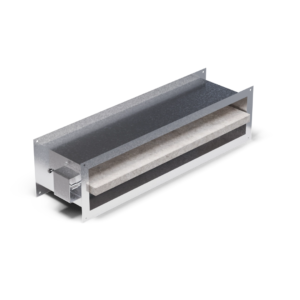
fire-rated rolling shutters
Fire dampers are safety components designed to prevent the spread of flames and explosive dust through the ventilation system. Installed at the points where air ducts pass between compartments, they activate automatically when certain temperatures are reached, cutting off the airflow and isolating sections of the system. Their use is governed by specific regulations and contributes to the protection of structures and production facilities, integrating with the building’s fire safety systems.
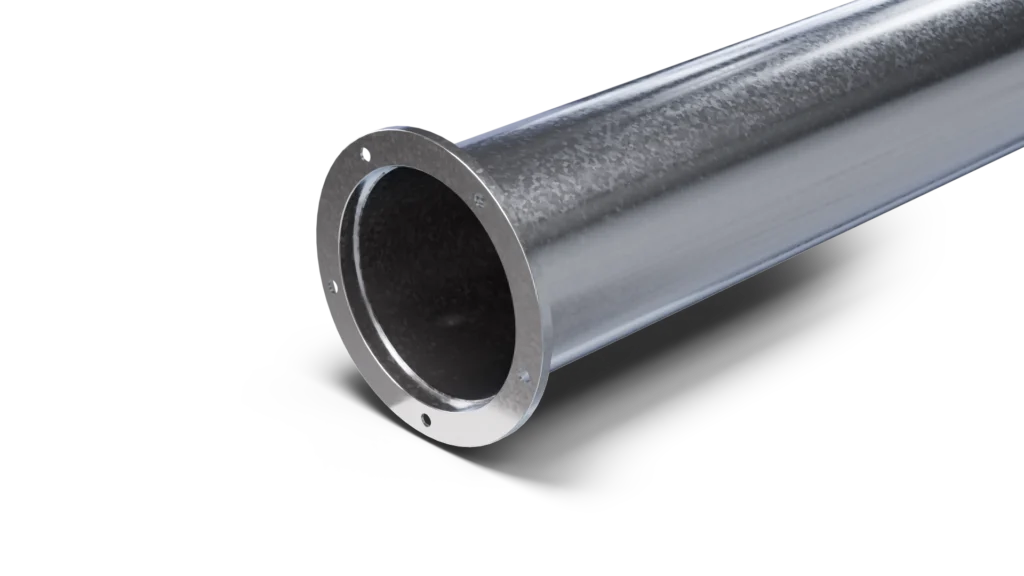
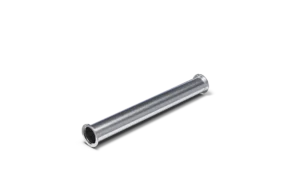
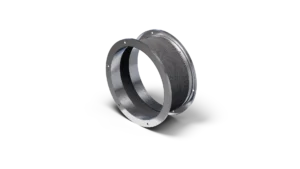
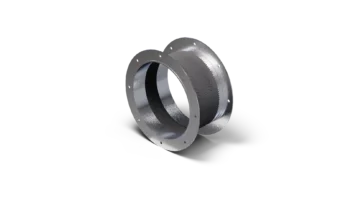
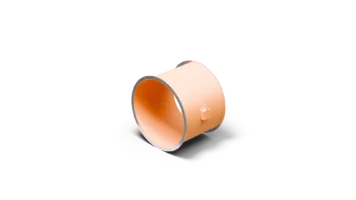
Collar-type pipes
Fire-Rated Rolling Shutters with a Release System and Fuse
Is it possible to implement heat recovery strategies to improve energy efficiency?
5.1 Filtered Air Recirculation and Heat Recovery
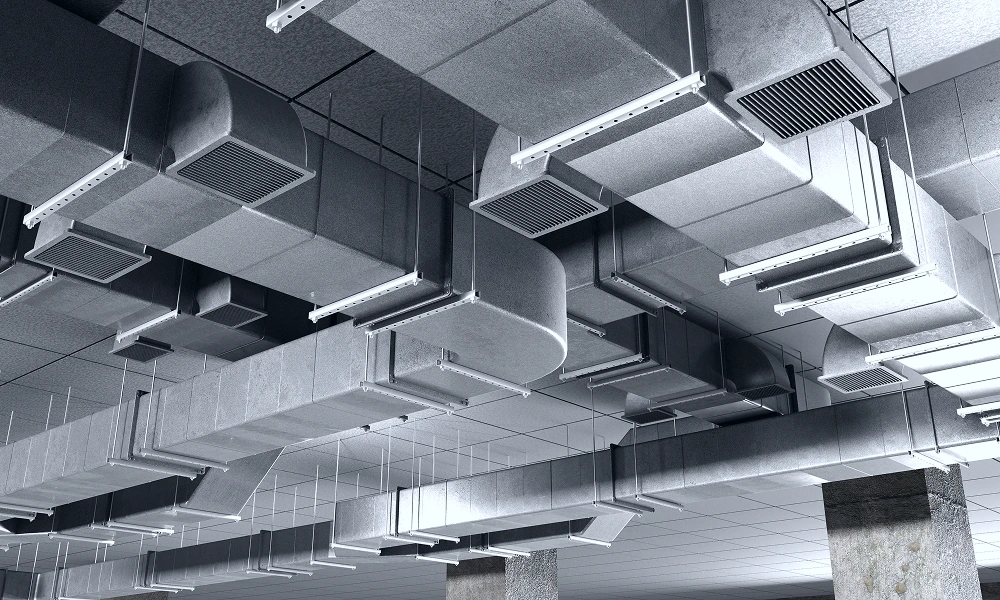
In industrial exhaust systems, heat recovery is achieved by recirculating filtered air back into the environment, with the goal of reducing heat loss and improving the system’s energy efficiency. In this configuration, the air distribution system consists of two functional sections: an intake line, which conveys air and particulate matter to the filtration system, and a supply line, which redistributes the purified air throughout the facility via vents or outlets. These systems are generally associated with centralized filtration units, often installed outside the building, and require careful monitoring of operating conditions and the quality of the re-circulated air.
SIGN UP FOR THE NEWSLETTER
To receive in-depth content, technical product materials, industry news, and promotional offers reserved for Quickduct customers